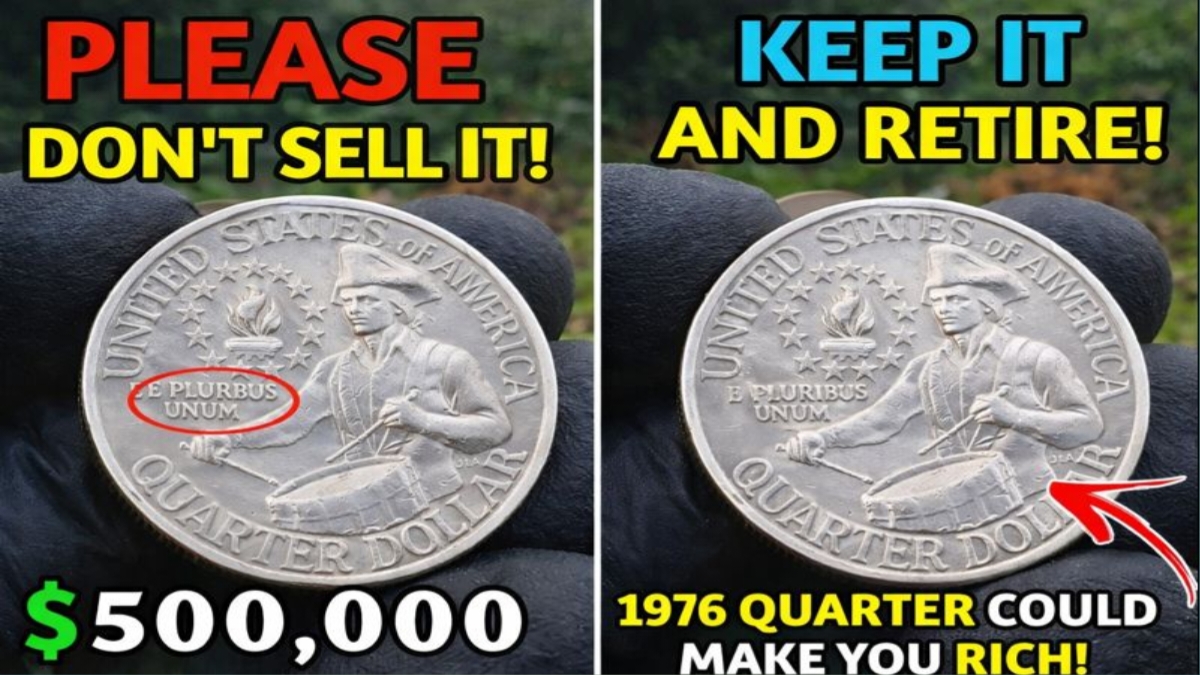
American coins are more than spare change—they’re pieces of history. Some coins were created to celebrate national milestones, while others became valuable by accident. As we move into 2026, interest in historic U.S. coins like the Bicentennial Quarter, rare Lincoln pennies, and wartime nickels continues to grow among collectors and investors alike.
Let’s break down what these coins mean, how much they’re worth today, and how to spot the rare ones hiding in plain sight.
The Story Behind the 1776–1976 Bicentennial Quarter
To celebrate 200 years of American independence, the United States Mint released special Bicentennial coins in 1975 and 1976. Instead of the usual eagle design, the quarter featured a colonial drummer, symbolizing the Revolutionary War era.
Why This Quarter Is Still Popular
- First U.S. quarter with a dual date (1776–1976)
- Produced in massive numbers for circulation
- Also minted in 40% silver versions for collectors
Bicentennial Quarter Value in 2026
- Circulated (clad): $0.25 – $1
- Uncirculated: $3 – $10
- 40% silver versions: $10 – $30+
- Error coins (double die, off-center): $100+
Most Bicentennial quarters aren’t rare—but condition and errors make a huge difference.
Rare 1943 Lincoln Wheat Penny Worth Up to $200,000
Among all U.S. coins, few are as legendary as the 1943 Copper Lincoln Wheat Penny.
Why 1943 Pennies Were Made of Steel
During World War II, copper was needed for ammunition. So in 1943, pennies were struck using zinc-coated steel instead of bronze.
How the Copper Penny Accident Happened
A small number of leftover 1942 copper planchets accidentally remained in mint presses. These blanks were struck with the 1943 design—creating one of the most famous minting errors ever.
Value in 2026
•Authentic 1943 copper penny: $100,000 – $200,000+
•Only a few confirmed examples exist
•Authentication is critical (many fakes exist)
1932-D and 1932-S Washington Quarters: Key Collector Coins
The Washington Quarter series began in 1932, and its first year produced two of the rarest circulation quarters.
1932-D Washington Quarter
- Minted in Denver
- Mintage: 436,800
- Value:
- Circulated: $300–$700
- Mint state: $1,000+
1932-S Washington Quarter
- Minted in San Francisco
- Even lower mintage: 408,000
- Value:
- Circulated: $400–$800
- High-grade: $1,500+
These coins are considered cornerstones of any Washington quarter collection.
Wartime Jefferson Nickels (1942–1945): Small Coins, Big History
During WWII, nickel was also redirected for military use. The solution? Silver.
What Makes Wartime Nickels Special
- Composition: 35% silver
- Large mint mark above Monticello
- First time a “P” mint mark appeared on U.S. coins
Key Years to Know
- 1942 – Both silver and non-silver versions exist
- 1943–1944 – Full wartime silver issues
- 1945 – Final year of silver composition
Wartime Jefferson Nickel Value in 2026
- Circulated examples: $2 – $5
- Uncirculated: $10 – $40
- Full Steps varieties: $100 – $1,000+
- Error coins: Can exceed $1,000
Silver content + historical importance keeps demand strong.
How to Identify a Wartime Jefferson Nickel
Look for these signs:
- Date between 1942–1945
- Large P, D, or S mint mark above Monticello
- Slightly different color or weight than normal nickels
These features make identification beginner-friendly.
Why Mint Marks Matter So Much
Mint marks tell collectors:
- Where a coin was made
- How rare it is
- Its historical context
The wartime “P” mint mark is especially important—it marked a turning point in U.S. minting history.
Smart Collecting Strategies for Beginners
If you’re new to coin collecting:
- Start with wartime nickels (affordable + historic)
- Learn grading basics (condition matters more than age)
- Avoid “too good to be true” online listings
- Always authenticate high-value coins
Building sets slowly is often smarter than chasing hype.
More Than Money: Why These Coins Matter
These coins represent moments when America adapted, celebrated, or innovated under pressure. From wartime resource shortages to national anniversaries, each coin tells a story far beyond its face value.
Collectors don’t just buy metal—they collect history you can hold in your hand.
FAQs – Rare U.S. Coins Explained
Are Bicentennial quarters rare?
Most are common, but silver versions and error coins can be valuable.
Is the 1943 copper penny real?
Yes—but extremely rare. Most are steel. Always get authentication.
Why are 1932 quarters expensive?
Very low mintage numbers, especially from Denver and San Francisco.
Do wartime nickels contain real silver?
Yes, 35% silver, making them popular with both collectors and investors.
Is coin collecting still profitable in 2026?
Yes—for rare, authenticated, and high-grade coins.